
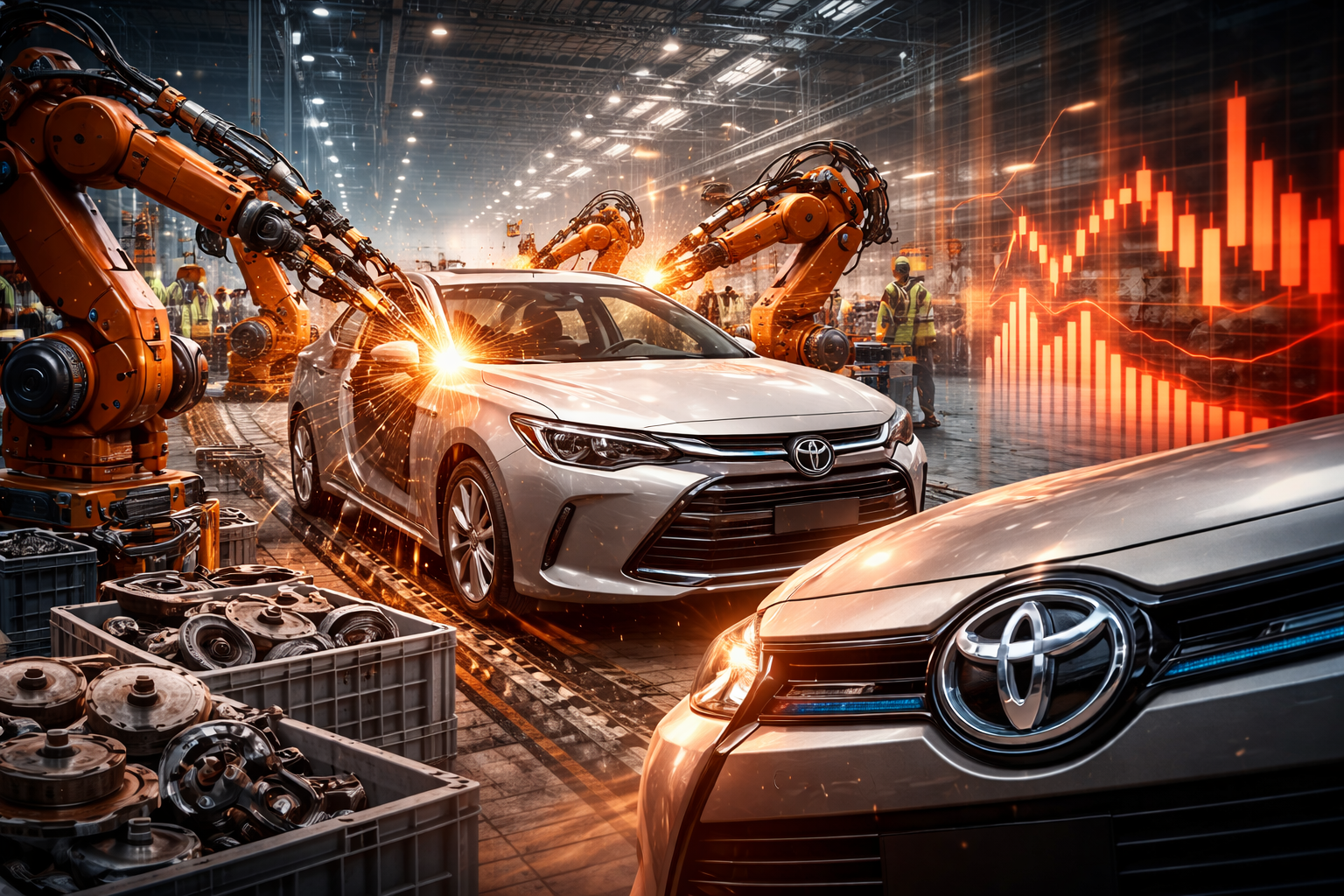

In a rare and urgent message, Toyota Motor Corporation has warned its global supplier network that the automotive industry is entering a critical survival phase. During a recent supplier meeting attended by hundreds of companies, leadership emphasized that without major improvements in productivity, even the world’s largest automaker could face serious challenges.
This warning reflects a broader shift in the global auto sector, where traditional manufacturing models are being disrupted by new technologies, changing consumer demands, and rising competition.
Why Toyota Is Concerned
Toyota’s leadership highlighted several key challenges:
- Rapid growth of Chinese automakers offering lower-cost vehicles
- Increasing importance of software and digital innovation
- Rising costs of materials and global trade tensions
- Pressure to transition toward electric and hybrid vehicles
According to CEO Koji Sato, the industry is facing “a battle for survival,” signaling that even established companies must adapt quickly.
Push for Higher Productivity
Toyota has urged its suppliers to significantly improve efficiency and reduce waste. The company is also rethinking its famously strict production standards.
In the past, Toyota rejected parts with even minor cosmetic imperfections. Now, it is moving toward a more flexible approach, allowing suppliers to cut costs without affecting performance.
This strategy aims to:
- Reduce unnecessary production waste
- Lower manufacturing costs
- Improve overall supply chain efficiency
Leadership Transition and Future Strategy
As part of its transformation, Toyota is undergoing a leadership change. Kenta Kon is set to take over as CEO, bringing a stronger focus on financial discipline and operational efficiency.
Despite Toyota’s massive global sales and strong profits, Kon has acknowledged that the company is not in a completely secure position.
His priorities include:
- Reducing the company’s break-even point
- Strengthening competitiveness
- Rebuilding the company’s long-term foundations
Growing Competition from China
One of the biggest threats to Toyota comes from Chinese automakers, who are rapidly expanding in both domestic and global markets.
These companies are:
- Producing vehicles at lower costs
- Innovating faster in electric vehicles and software
- Delivering cars to market more quickly
This shift is forcing traditional automakers like Toyota to rethink their strategies and accelerate innovation.
What This Means for the Auto Industry
Toyota’s warning is not just about one company—it reflects a wider transformation across the automotive sector.
Key implications include:
- Increased pressure on suppliers to innovate and cut costs
- Faster shift toward electric and software-driven vehicles
- Greater global competition reshaping market dynamics
- Need for stronger collaboration across the supply chain
Conclusion
Toyota’s message is clear: the automotive industry is at a turning point. With rising competition, technological disruption, and economic pressures, both manufacturers and suppliers must adapt quickly.
The call for improved productivity is not just a strategy—it is a necessity for survival in an increasingly competitive global market.


 By
By

 By
By