
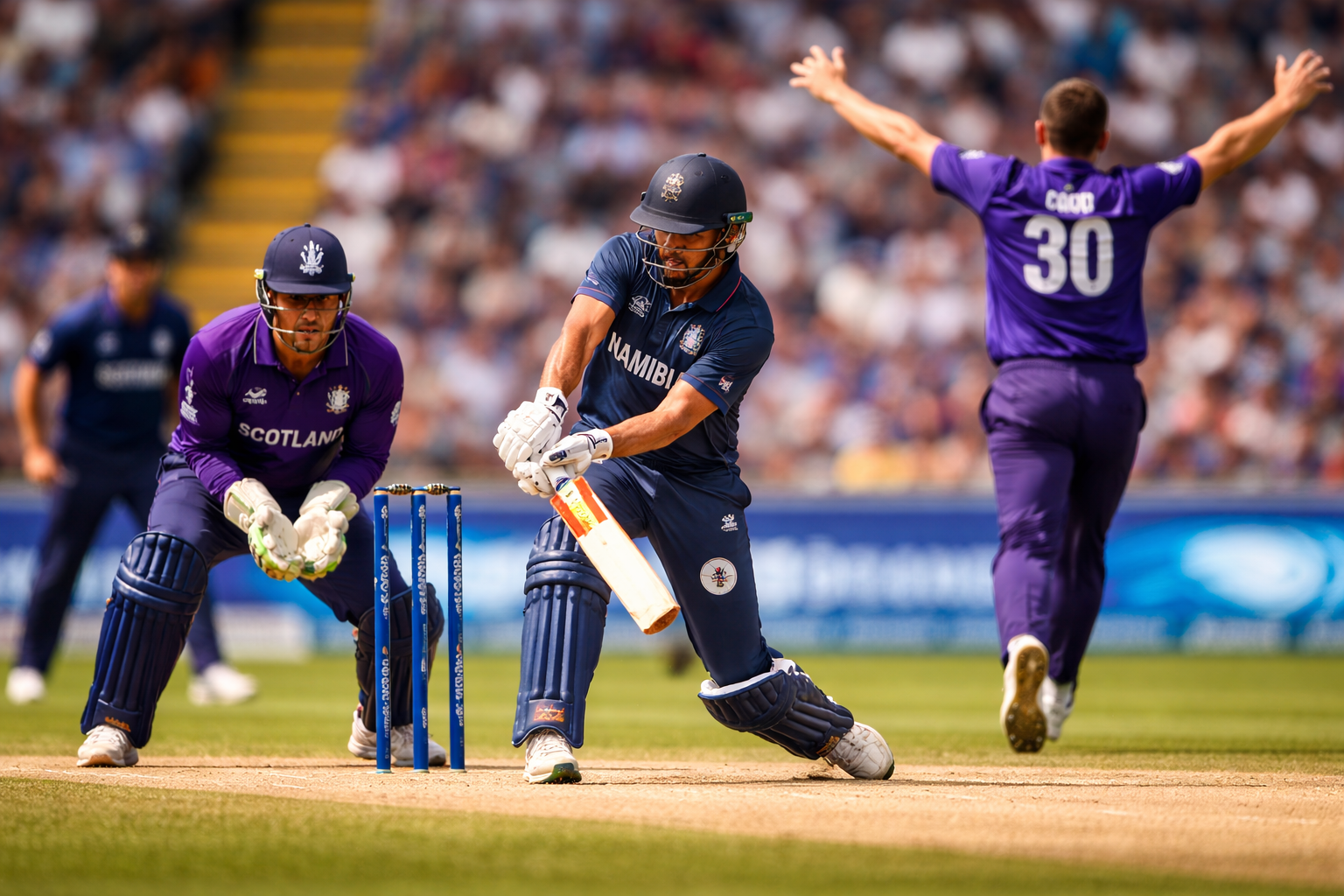

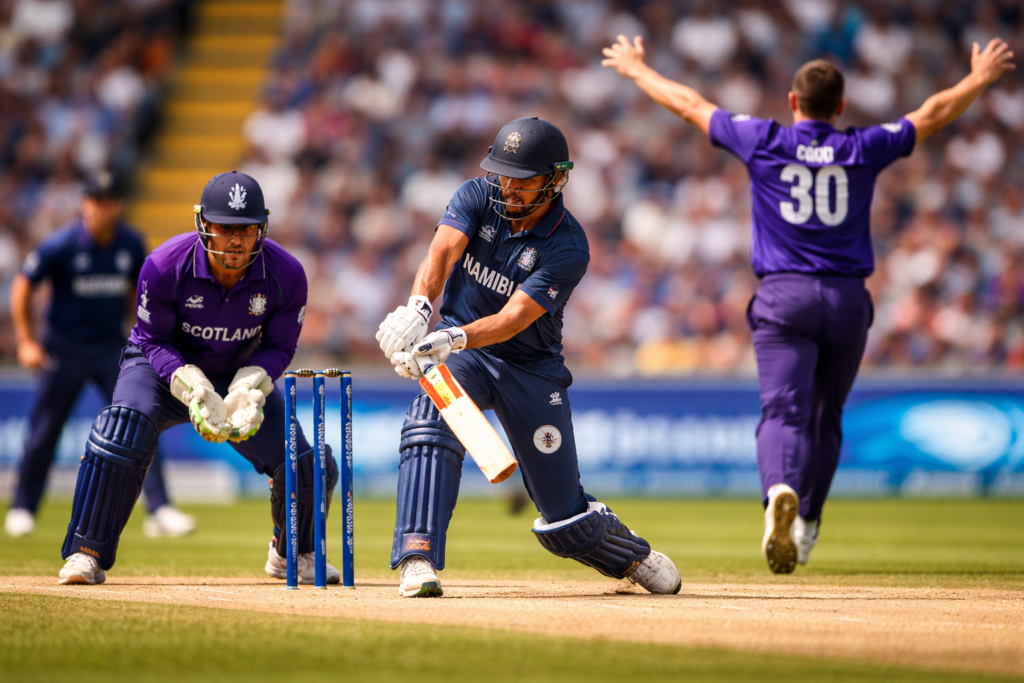
The 94th match of the ICC Cricket World Cup League 2 (2023–27) between Namibia and Scotland at the Wanderers Cricket Ground in Windhoek delivered a steady and tactical contest, with Namibia showing resilience after an early collapse.
Early Setback for Namibia
After Scotland won the toss and chose to bowl first, Namibia struggled at the start of their innings. The top order failed to build momentum, losing quick wickets in the powerplay. At one stage, Namibia found themselves under pressure at 27/3 after 10 overs, with Scotland’s bowlers maintaining tight control.
The situation worsened when another key wicket fell, leaving Namibia at 36/4, putting them in a challenging position early in the match.
Steady Recovery in Middle Overs
Despite the shaky start, Namibia rebuilt their innings through a crucial partnership between Zane Green and Louren Steenkamp. The duo played patiently, rotating the strike and capitalizing on loose deliveries to stabilize the innings.
Their partnership helped Namibia recover gradually:
- 61/4 after 20 overs
- 96/4 after 28 overs
- 125/4 after 34 overs
Steenkamp anchored the innings with a composed knock nearing a half-century, while Green provided solid support from the other end. Their effort ensured Namibia regained control and avoided a complete collapse.
Scotland’s Bowling Effort
Scotland’s bowlers started strongly, picking up early wickets and putting Namibia on the back foot. Bowlers like Safyaan Sharif and Jack Jarvis played key roles in breaking the top order. However, as the innings progressed, Scotland struggled to break the middle-order partnership, allowing Namibia to rebuild.
Match Situation
By the mid-innings stage, Namibia had managed to post a competitive total foundation despite early setbacks. With wickets in hand and a steady run rate, they positioned themselves to push for a stronger finish in the final overs.
Conclusion
The match highlighted Namibia’s fighting spirit after a difficult start. While Scotland dominated the early phase, Namibia’s middle-order resilience shifted the momentum. The outcome of the match would largely depend on how both teams perform in the later stages—whether Namibia can accelerate or Scotland can bounce back with timely breakthroughs.


 By
By



 By
By