
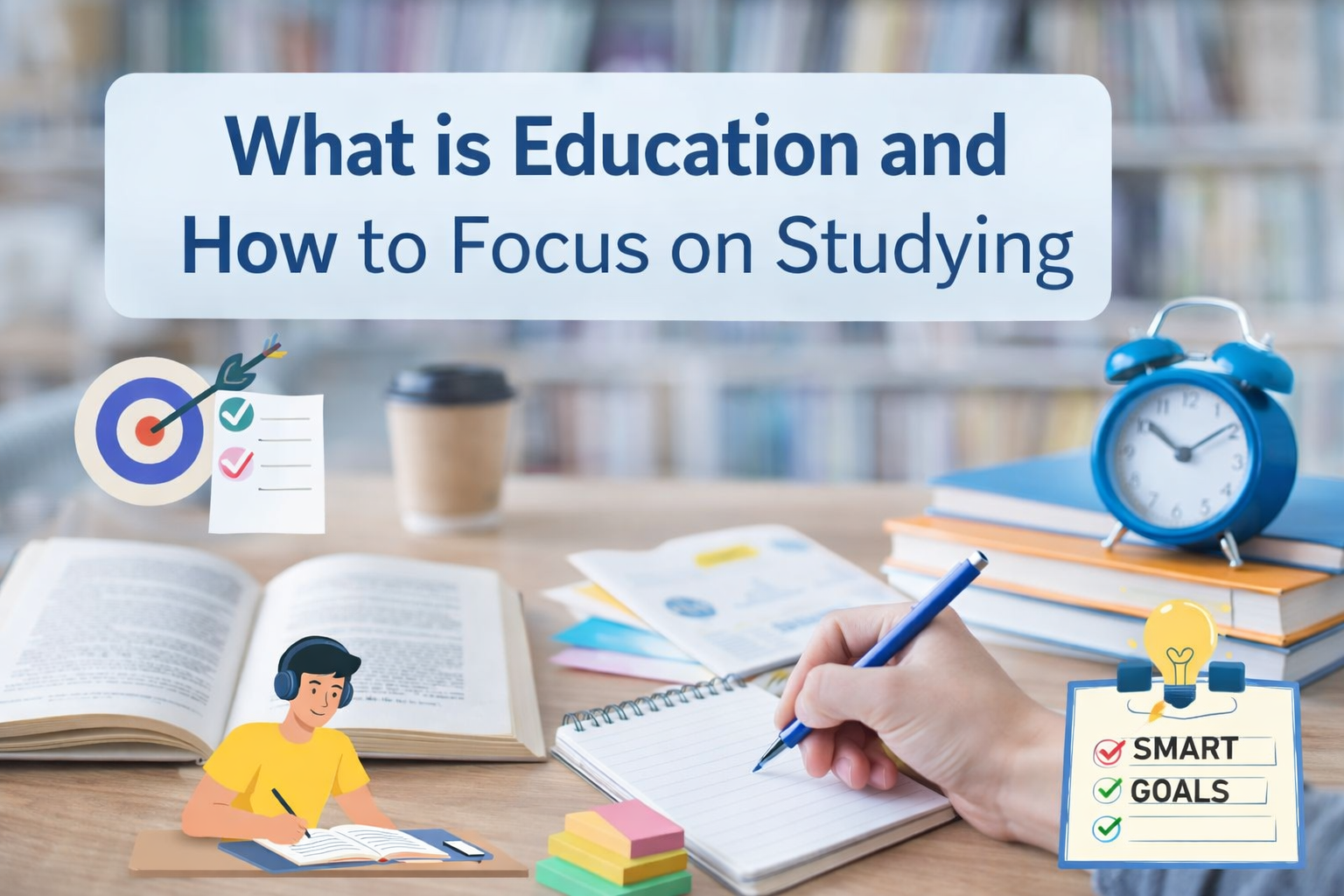

Education is often misunderstood as simply attending school, memorizing information, and passing exams. In reality, education is a continuous process of learning, thinking, and applying knowledge in real life. It shapes how we understand the world, make decisions, and solve problems.
Focusing on education is not just about academic success—it is about building a strong foundation for your future. Just like in a video game where each level requires effort and skill, education works the same way. The more you invest in learning, the more you grow, level by level.
Why Focusing on Education Matters More Than Ever
In today’s competitive world, knowledge alone is not enough. What truly matters is the ability to apply what you learn.
Research in cognitive science shows that consistent learning and focused practice improve brain function, memory, and problem-solving skills. According to studies from organizations like the Harvard University, students who set clear goals and follow structured learning plans perform significantly better than those who study randomly.
Education gives you:
- The ability to think critically
- Confidence to face challenges
- Skills to adapt in a changing world
- Opportunities for better careers
1. Set Clear Goals: The Foundation of Focus
Without a clear goal, studying becomes directionless.
When you define what you want to achieve, your brain automatically prioritizes tasks that move you closer to that goal. This is supported by goal-setting theory in psychology, which states that specific and challenging goals lead to higher performance.
A student preparing for a government exam like SSC or banking sets a goal:
“Complete Quantitative Aptitude in 30 days.”
This clarity helps them:
- Focus on one subject at a time
- Track daily progress
- Stay motivated
Compare this to someone who just says, “I will study today”—the second approach lacks direction and leads to procrastination.
2. Create a Study Plan: Turning Goals into Action
A goal without a plan is just a wish.
Creating a study plan helps you manage time effectively and reduces stress. Research on time management shows that students who follow a structured schedule experience less anxiety and better academic performance.
Instead of studying randomly, divide your day:
- Morning: Theory learning
- Afternoon: Practice questions
- Evening: Revision
This structured approach ensures balanced learning and avoids last-minute pressure.
3. Stay Focused: Eliminate Distractions
One of the biggest challenges in modern education is distraction—especially from smartphones and social media.
Studies suggest that even a single notification can reduce focus and increase the time needed to return to deep concentration.
Practical Strategy:
- Keep your phone in another room
- Use “focus mode” apps
- Choose a quiet study environment
A student who studies for 2 hours without distractions often achieves more than someone studying 5 hours with interruptions.
Focus is not about time—it’s about quality.
4. Take Consistent Action: The Power of Daily Effort
Consistency beats intensity.
Learning a little every day is far more effective than studying for long hours occasionally. This concept is supported by the “spacing effect” in psychology, which shows that spaced learning improves long-term memory.
- Studying 1 hour daily for 30 days = Strong understanding
- Studying 10 hours once a week = Weak retention
Regular practice strengthens your brain’s ability to recall information quickly.
5. Track Your Progress: Measure to Improve
Progress tracking helps you stay motivated and aware of your performance.
When you regularly review your learning, you can:
- Identify weak areas
- Adjust your strategy
- Stay confident about your growth
A student solving mock tests weekly can clearly see improvement in scores, which boosts motivation and builds confidence before exams.
6. Set SMART Goals: A Proven Method for Success
SMART goals are widely used in education and professional development because they provide clarity and structure.
- Specific: Clear objective (e.g., complete 2 chapters)
- Measurable: Track progress (number of questions solved)
- Achievable: Realistic targets
- Relevant: Connected to your main goal
- Time-bound: Deadline-driven
Instead of saying “I will study math”, say:
“I will complete 50 algebra questions in 2 hours.”
This approach increases productivity and focus.
The Psychology Behind Focus and Motivation
Focus is not just about discipline—it’s about understanding how your brain works.
- The brain prefers clear tasks over vague ones
- Small achievements release dopamine, increasing motivation
- Repetition strengthens neural connections
This is why habits like daily study routines and goal setting are so effective.
Conclusion: Education is Your Long-Term Investment
Focusing on education is one of the most powerful decisions you can make. It is not about being perfect—it is about being consistent.
When you:
- Set clear goals
- Follow a plan
- Stay focused
- Take daily action
- Track progress
You gradually build a strong foundation for success.
Just like leveling up in a game, every small step in learning brings you closer to your bigger goal.
Final Thought
You don’t need to study more—you need to study smarter.
Start today. Stay consistent. Your future self will thank you.


 By
By



 By
By