
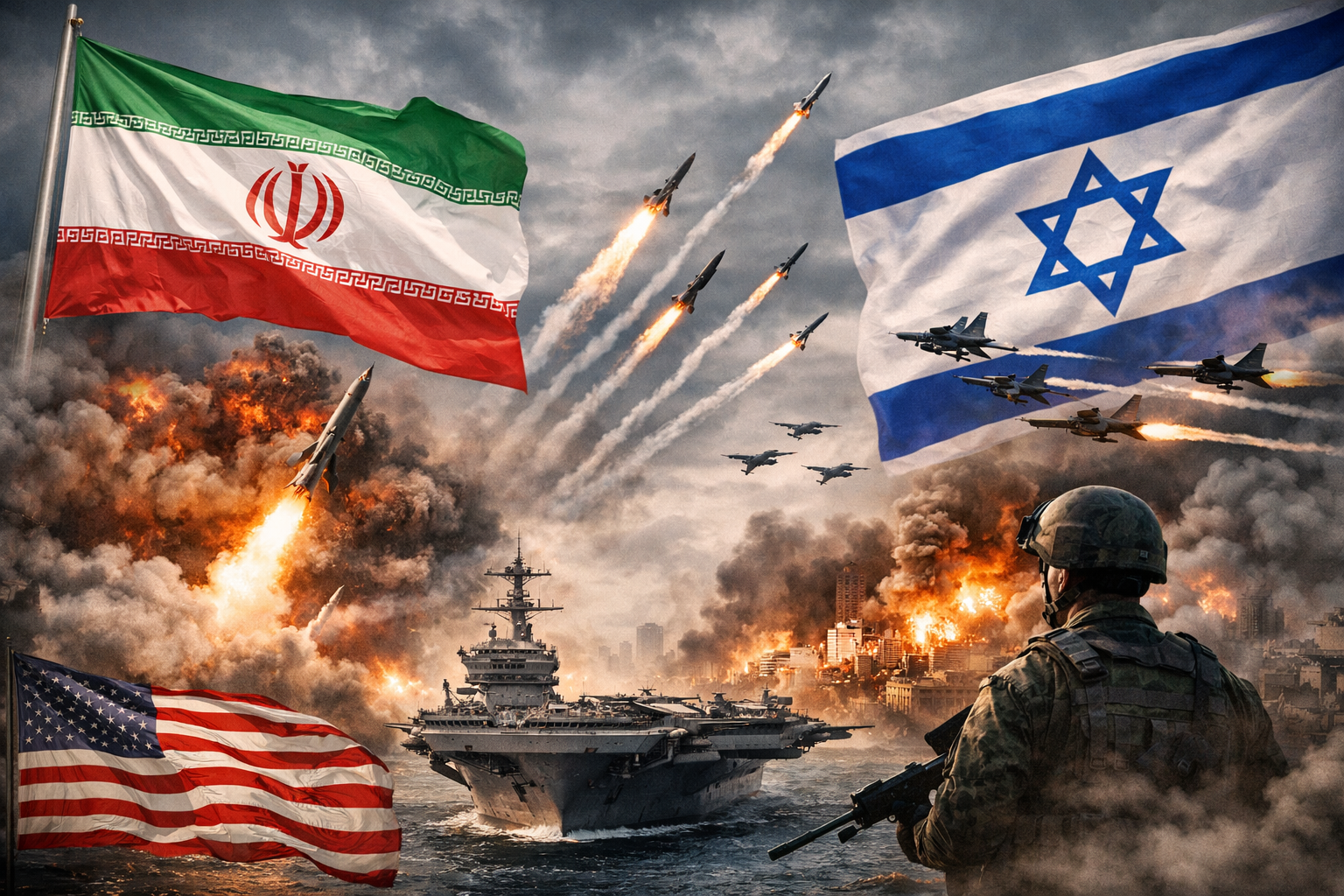

The Middle East is experiencing a serious escalation in tensions as conflict involving Iran, the United States, and Israel intensifies. Recent military actions and retaliatory strikes have increased fears of a wider regional confrontation. With multiple countries and allied groups becoming involved, the situation has quickly developed into one of the most serious geopolitical challenges in recent years.
Military Strikes Trigger the Crisis
The current escalation began after coordinated strikes targeted several strategic locations inside Iran. These operations were aimed at weakening key military capabilities and disrupting infrastructure connected to defense and security operations. The attacks marked a significant shift from indirect tensions to more direct military confrontation.
In response, Iran launched missile and drone strikes toward Israeli territory and locations associated with American military presence in the region. Some of these attacks managed to reach populated areas, resulting in damage and casualties. The strikes also forced authorities in Israel to activate air defense systems and emergency protocols to protect civilians.
Regional Groups Enter the Conflict
The conflict quickly spread beyond the primary countries involved. Armed groups aligned with Iran across the region began increasing their activity, which further expanded the scope of the crisis.
In Lebanon, intense exchanges of fire have been reported as Israeli forces target positions believed to be connected to Hezbollah. At the same time, security concerns have increased in several Gulf countries hosting American military bases. Governments in these regions have strengthened defensive measures and heightened alert levels to prepare for possible attacks.
Increased Military Presence
As the situation escalated, the United States reinforced its military presence in the Middle East. Additional troops, aircraft, and naval units were deployed to strategic areas. These moves were intended to deter further aggression and provide support to allies in the region.
Meanwhile, Iran has issued strong warnings regarding any attempts to target its economic infrastructure. Officials have indicated that strikes on important facilities—particularly those connected to energy production—could lead to significant retaliation.
Impact on Global Markets and Security
The ongoing conflict has already begun affecting global markets. One major concern is the potential disruption of energy supplies, particularly through the Strait of Hormuz. This narrow shipping route is one of the world’s most important channels for transporting oil, and any instability there could affect global energy prices.
Shipping companies and insurers are becoming increasingly cautious about operating near the conflict zone. As uncertainty grows, international markets are responding with rising oil prices and increased volatility.
What Lies Ahead?
The future of this crisis remains uncertain. Military actions and strong political statements from all sides suggest that tensions may continue in the near term. Analysts warn that without diplomatic efforts to reduce hostility, the conflict could expand further and involve additional countries.
For now, the world is watching closely as leaders weigh military strategies against the urgent need for stability and peace in a region already shaped by decades of conflict.


 By
By

 By
By