
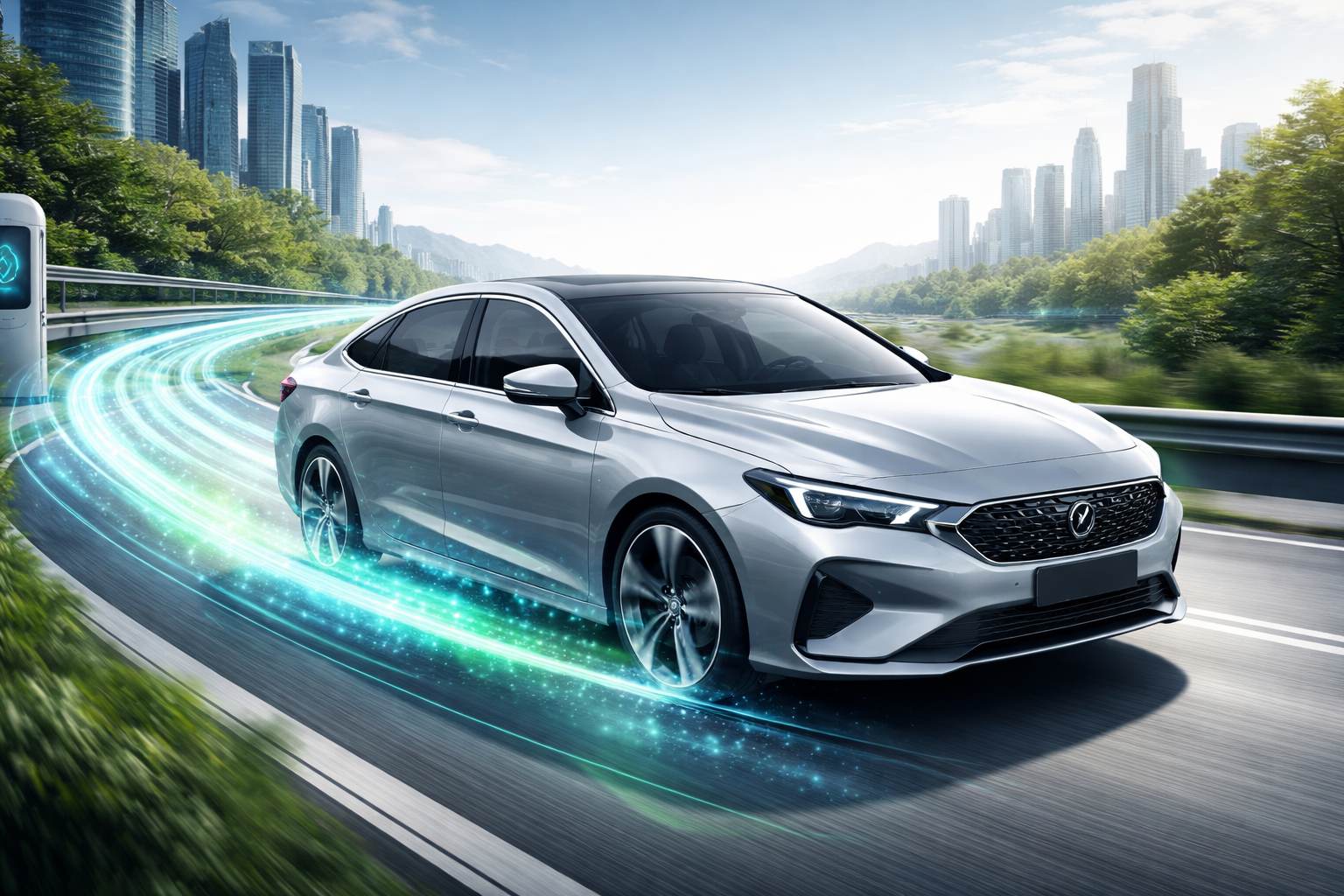

The automotive industry is rapidly evolving, and hybrid technology is becoming a key bridge between fuel-powered and electric vehicles. Chinese automaker Geely has taken a major leap forward with its latest i-HEV (Intelligent Hybrid Electric Vehicle) system, delivering an impressive mileage of up to 45 km per litre. This breakthrough not only sets a new efficiency benchmark but also challenges the dominance of traditional hybrid leaders.
What is Geely’s i-HEV Hybrid System?
Geely’s i-HEV is a next-generation hybrid system designed to maximize fuel efficiency while maintaining performance. It combines a highly efficient combustion engine with an advanced electric motor and intelligent energy management.
The system was recently tested in the Geely Emgrand sedan, achieving a record fuel consumption of just 2.22 litres per 100 km, which translates to approximately 45 km/l.
AI-Powered Efficiency: The Key Innovation
One of the standout features of the i-HEV system is its AI-based energy management platform. This technology analyzes real-time driving conditions such as speed, terrain, and traffic patterns.
Based on this data, the system automatically switches between:
- Pure electric mode
- Series hybrid mode
- Parallel hybrid mode
This intelligent switching ensures the engine always operates at peak efficiency, improving overall fuel economy by more than 10% compared to traditional systems.
Record-Breaking Mileage and Thermal Efficiency
The i-HEV system has achieved a Guinness World Record for fuel efficiency, making it one of the most efficient hybrid technologies currently available.
Key performance highlights include:
- Mileage: Up to 45 km/l
- Fuel consumption: 2.22 L/100 km
- Thermal efficiency: Around 48.4%
- Electric motor power: 230 kW (313 PS)
This level of thermal efficiency is among the highest in mass-produced engines, meaning more energy from fuel is converted into usable power.
Performance Meets Practicality
While efficiency is the main focus, the i-HEV system does not compromise on performance. The electric drive enables quick acceleration, reaching 0–30 km/h in under 2 seconds.
Additionally, the system is optimized for:
- City driving with frequent stop-and-go traffic
- Smooth low-speed handling
- Better energy regeneration
Real-World Mileage Expectations
Although the record figure stands at 45 km/l, real-world mileage may vary depending on driving conditions. For example:
- Sedans like Preface: Around 25 km/l
- SUVs like Monjaro: Around 21 km/l
These figures are still highly competitive and significantly better than most conventional petrol vehicles.
Future Models with i-HEV Technology
Geely plans to integrate the i-HEV system into multiple upcoming models, including:
- Emgrand
- Preface
- Monjaro
- Starray
This indicates a strong push towards hybrid technology as a practical alternative to fully electric vehicles.
Why This Matters for the Auto Industry
Geely’s innovation signals a shift in the global automotive landscape. Hybrid systems are becoming smarter, more efficient, and more accessible.
With AI integration and record-breaking efficiency, the i-HEV system directly challenges established hybrid technologies from brands like Toyota and Honda, potentially reshaping the competitive market.
Conclusion
Geely’s i-HEV hybrid system represents a significant step forward in automotive engineering. By combining AI-driven intelligence with high thermal efficiency, it delivers exceptional mileage without sacrificing performance.
As fuel prices continue to rise and environmental concerns grow, innovations like i-HEV could play a crucial role in the future of sustainable mobility.
FAQs
1. What is the mileage of Geely i-HEV?
The system can deliver up to 45 km per litre under ideal test conditions.
2. How does the i-HEV system work?
It uses AI to switch between electric and hybrid driving modes for maximum efficiency.
3. Is 45 km/l achievable in real-world driving?
Real-world mileage is typically lower but still highly efficient compared to standard vehicles.
4. Which cars will get the i-HEV system?
Models like Emgrand, Preface, and Monjaro will feature this technology.


 By
By

 By
By