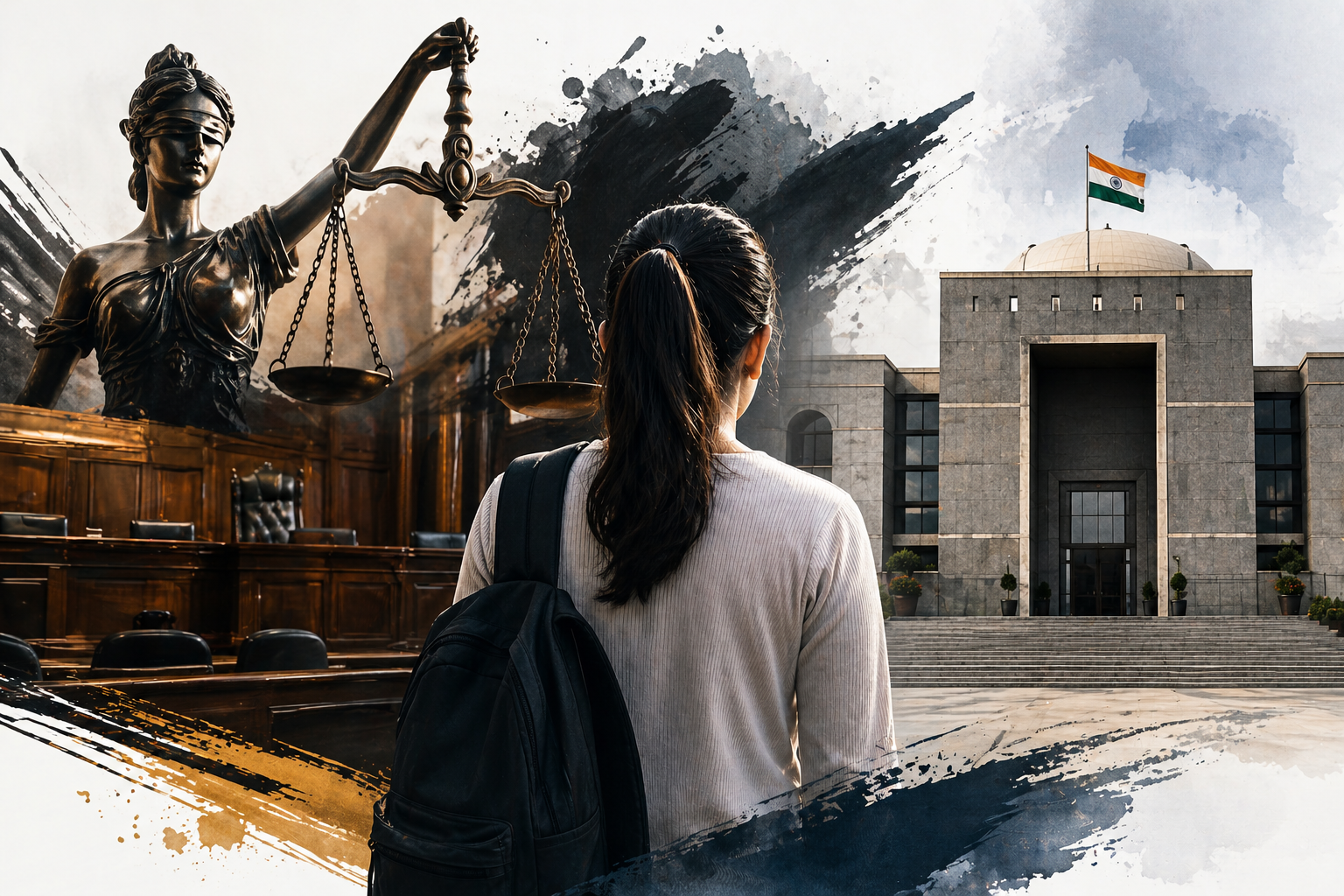

A recent incident in the Gujarat High Court has sparked discussion around courtroom decorum and individual expression. The matter came to light when a judge raised concerns over the attire of a college student उपस्थित during a court hearing.
What Happened in the Courtroom?
During the proceedings, Justice Nirzar S. Desai objected to the clothing worn by a female student who had come to attend her case. The student, reportedly from Indian Institute of Technology Gandhinagar, was present in connection with a legal challenge related to her academic suspension.
The judge emphasized that a courtroom is not just any public space—it is a place that demands respect and discipline. Referring to it as a “temple of justice,” he highlighted the importance of maintaining appropriate decorum while attending court proceedings.
Why Did the Issue Gain Attention?
The situation drew attention not just because of the remark itself, but because it raises a larger question: What defines “appropriate” attire in formal institutions like courts?
According to reports, the judge asked the student to leave the courtroom due to what was considered unsuitable clothing. This moment led to a broader conversation about the balance between institutional discipline and personal freedom.
Courtroom Decorum vs Personal Expression
Courts in India have long been governed by unwritten norms of behavior and dress. Lawyers follow strict dress codes, and even visitors are expected to present themselves in a respectful manner.
However, this incident has opened up debate on whether such expectations should extend to students or ordinary citizens in the same way. Critics argue that:
- Standards of “appropriate attire” can be subjective
- Enforcing them strictly may lead to discomfort or discrimination
- Personal freedom should be respected, especially for young individuals
On the other hand, supporters believe that:
- Courts are formal spaces requiring discipline
- Maintaining decorum ensures respect for the judicial system
- Certain standards help preserve the dignity of proceedings
A Broader Social Reflection
This incident is not just about one student or one courtroom—it reflects a larger societal conversation. As institutions evolve, questions about tradition versus modern values become more prominent.
India, being a diverse society, often finds itself balancing cultural expectations with changing attitudes toward individual rights. Situations like this highlight how sensitive and complex that balance can be.
Conclusion
The episode at the Gujarat High Court serves as a reminder of the ongoing dialogue between institutional norms and personal freedoms. While maintaining respect for legal spaces is important, it also raises valid questions about how far such expectations should go.
As society continues to evolve, such incidents may encourage clearer guidelines and more inclusive approaches—ensuring that dignity and individual expression can coexist within the justice system.


 By
By

 By
By