
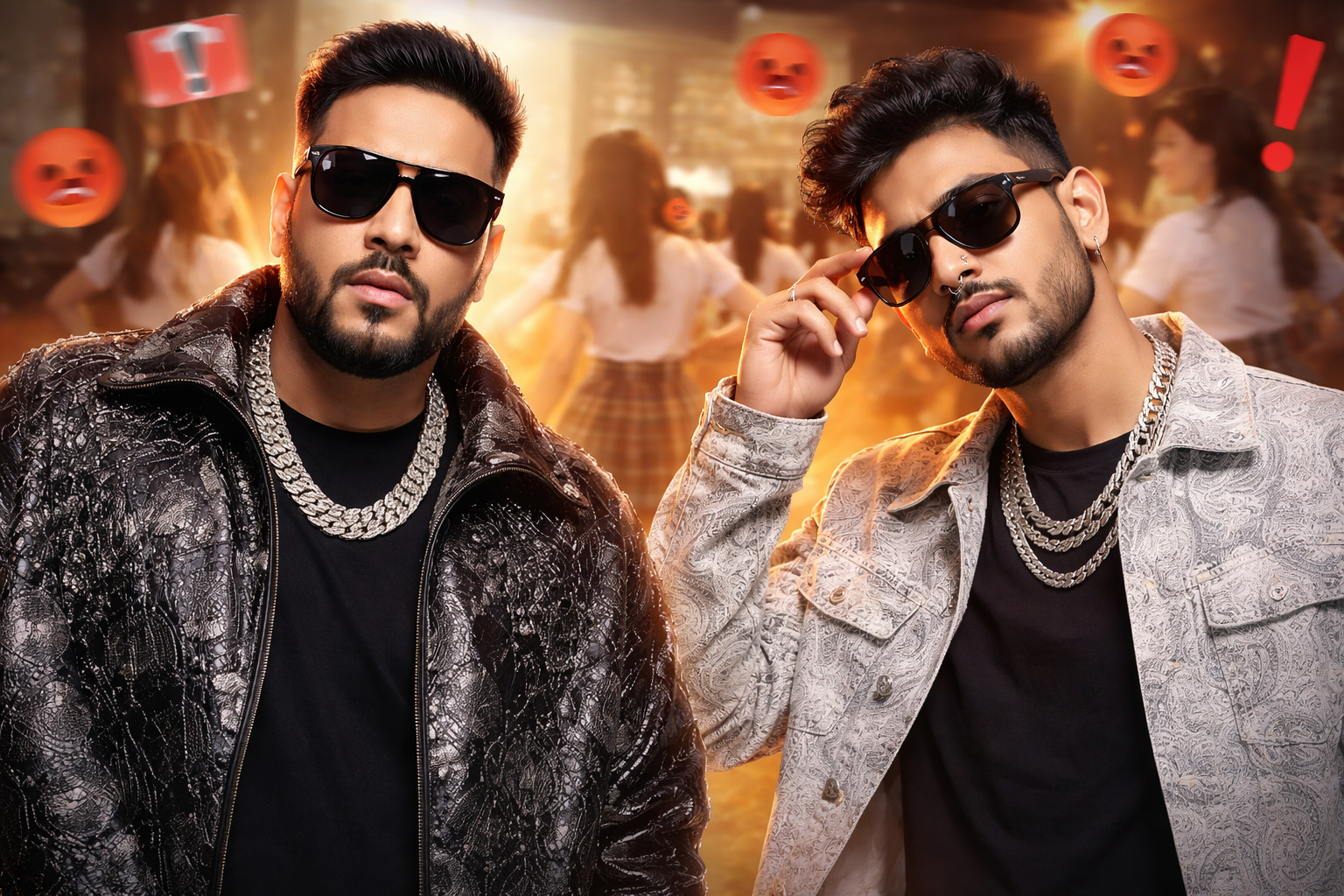
Indian rapper and music producer Badshah has recently found himself in the middle of a controversy following the release of his song Tateeree. The track quickly drew attention on social media, with several users criticizing the lyrics and visuals of the music video. As the debate intensified, fellow rapper Santy Sharma stepped forward to defend the singer, saying that Badshah is being judged without fully understanding the nature of rap and hip-hop music.
Why the Song Triggered Controversy
The controversy began after the release of Tateeree, which some critics claimed contained objectionable lyrics and visuals. Several viewers argued that certain parts of the video and wording in the song could be seen as inappropriate or insensitive. As a result, the track sparked widespread discussions across social media platforms and entertainment circles.
The issue also attracted the attention of authorities and organizations that monitor media content. Complaints were reportedly filed regarding the song, and discussions about whether the content violated cultural or social sensitivities began circulating online.
Santy Sharma Defends Badshah
Amid the criticism, rapper Santy Sharma publicly supported Badshah and urged people not to jump to conclusions without understanding the creative process behind rap music.
According to Sharma, rap and hip-hop often use storytelling, wordplay, and exaggerated expressions as part of the genre’s style. He suggested that listeners sometimes interpret lyrics literally without considering the broader artistic context.
Sharma also pointed out that the audio of a song is usually recorded much earlier than the music video production. Because different teams may handle visuals, the artist might not always control every aspect of the final presentation.
Debate Over Rap Culture in India
The controversy surrounding Tateeree has once again highlighted the ongoing debate about creative freedom and cultural responsibility in music. While some people believe artists should be careful about the messages their songs send, others argue that music—especially rap—often reflects social realities and uses bold language as a form of expression.
Supporters of Badshah say that the backlash shows how rap culture is sometimes misunderstood in India, where the genre is still evolving and gaining mainstream recognition.
Badshah Responds to the Criticism
Following the controversy, Badshah reportedly expressed regret if the song hurt anyone’s sentiments. The move was seen as an attempt to calm the situation and address public concerns surrounding the track.
Despite the apology, the debate around the song continues online, with discussions focusing on artistic expression, responsibility, and how music is interpreted by different audiences.
Growing Scrutiny for Artists
The incident reflects a larger trend in the entertainment industry where artists face intense scrutiny in the digital era. Songs, videos, and social media posts can quickly become viral topics, leading to public debates about culture, ethics, and creative freedom.
As hip-hop continues to grow in India, controversies like this highlight the challenges artists may encounter when balancing artistic expression with audience expectations


 By
By

 By
By