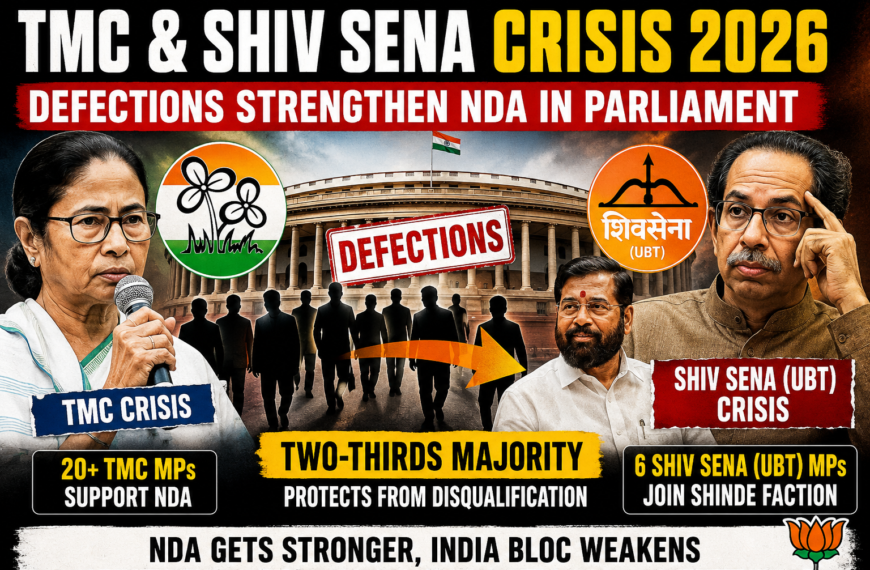

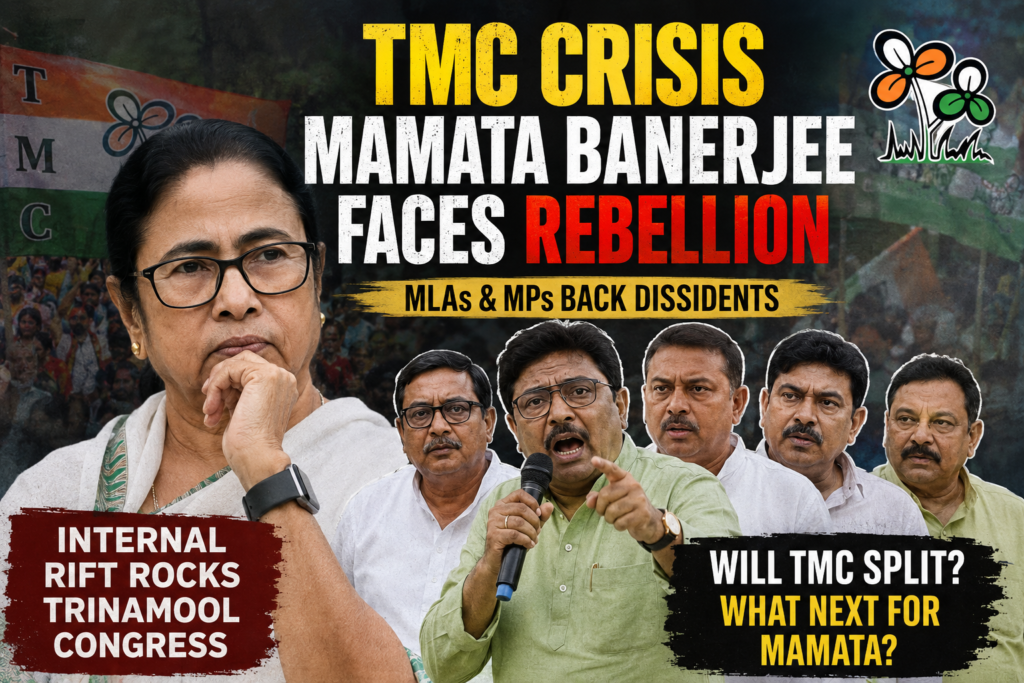
West Bengal politics is witnessing one of its most turbulent phases as Mamata Banerjee’s Trinamool Congress (TMC) faces an unprecedented internal rebellion. Once considered a tightly controlled political force, the party is now grappling with dissent from within, raising serious questions about its future and leadership stability.
Rising Internal Rift in TMC
The crisis within TMC has intensified over the past few weeks, with a large group of rebel leaders challenging the party’s leadership structure. Reports suggest that nearly 50–60 MLAs have aligned with dissident factions, signaling a potential split in the party.
The rebellion is not merely symbolic—it reflects deep-rooted dissatisfaction among party members. Dissidents have even backed alternative leadership, indicating a parallel power center emerging within TMC.
Resignations and Political Shockwaves
Adding to the turmoil, senior leaders have begun stepping away from the party. A major development came when Rajya Sabha MP Sukhendu Sekhar Roy resigned from both the party and Parliament, highlighting the seriousness of the internal conflict.
Such resignations have weakened the party’s parliamentary strength and raised concerns about further exits in the coming days.
Mamata Banerjee’s Damage Control Efforts
In response to the crisis, Mamata Banerjee has taken several steps to regain control. She has rushed to Delhi to hold discussions with party MPs and prevent further defections.
The leadership is also reportedly trying to avoid expelling rebel MPs, as doing so could allow them to legally split under anti-defection laws if they gather enough support.
Collapse of Party Structure
In a dramatic move, TMC dissolved all its organizational committees and wings in an attempt to restructure and contain the rebellion.
This decision reflects the depth of the crisis, as the party attempts to rebuild its internal structure from scratch amid growing instability.
Impact on West Bengal Politics
The ongoing turmoil has broader implications for West Bengal’s political landscape. After losing power in the 2026 state elections, TMC is now facing a dual challenge—external pressure from opposition parties and internal fragmentation.
The emergence of rebel factions could reshape the opposition dynamics and strengthen rival political forces in the state.
National-Level Implications
The crisis is not limited to state politics. TMC plays a key role in the opposition INDIA bloc, and internal instability could weaken the coalition’s unity at the national level.
As opposition parties attempt to present a united front, TMC’s internal divisions may complicate collective strategies against the ruling government.
What Lies Ahead?
Political analysts believe that the coming weeks will be crucial for TMC. The party faces two possible scenarios:
- Reconciliation and restructuring, restoring unity under Mamata Banerjee
- A formal split, leading to the emergence of a new political faction
Either outcome will significantly impact not just West Bengal but also national opposition politics.
Conclusion
Mamata Banerjee’s leadership is facing its toughest test in decades. The ongoing rebellion within TMC highlights the challenges of maintaining unity in a party built around strong central leadership. Whether TMC survives this crisis or fractures into multiple factions will shape the future of Indian politics in the months ahead.


 By
By

 By
By