

Introduction
Artificial Intelligence (AI) is not just about using tools—it’s about learning how to think, solve problems, and work smarter with technology. Many beginners jump directly into using AI tools, but the real advantage comes when you understand how AI works and how to apply it in real-life situations.
If you follow the right approach—learning, practicing, and applying—you can use AI effectively in your daily life, even without a technical background.
What is AI (Simple Understanding)?
AI is the ability of machines to perform tasks that usually require human intelligence, such as understanding language, recognizing patterns, and making decisions.
For example, when you use a chatbot, get movie recommendations, or translate a language, AI is working in the background. It uses data and algorithms to learn and improve over time. Understanding this basic concept helps you use AI more effectively instead of just depending on it blindly.
Learn the Basics of AI
Before using AI tools, it’s important to understand the basics. You don’t need deep technical knowledge, but you should know simple concepts like how AI works, what data is, and how machines learn. This foundation helps you use AI more confidently and avoid confusion. When you understand the “why” behind AI, you can make better decisions while using it in real-life situations.
Build Simple Digital Skills
To use AI effectively, you need basic digital skills like searching online, typing clear instructions, and understanding outputs. These skills may seem small, but they play a big role in how well AI works for you. For example, knowing how to write clear prompts or edit content can improve your results significantly. Strong basic skills make AI tools more powerful and useful in your daily tasks.
Start Using Beginner-Friendly AI Tools
Once you understand the basics, start using simple AI tools. Tools like ChatGPT for writing, Canva AI for design, and Google Gemini for research are beginner-friendly. These tools don’t require technical knowledge and can be used immediately. Focus on one tool at a time and explore its features. This step helps you move from learning theory to real-world usage without feeling overwhelmed.
Practice with Real-Life Tasks
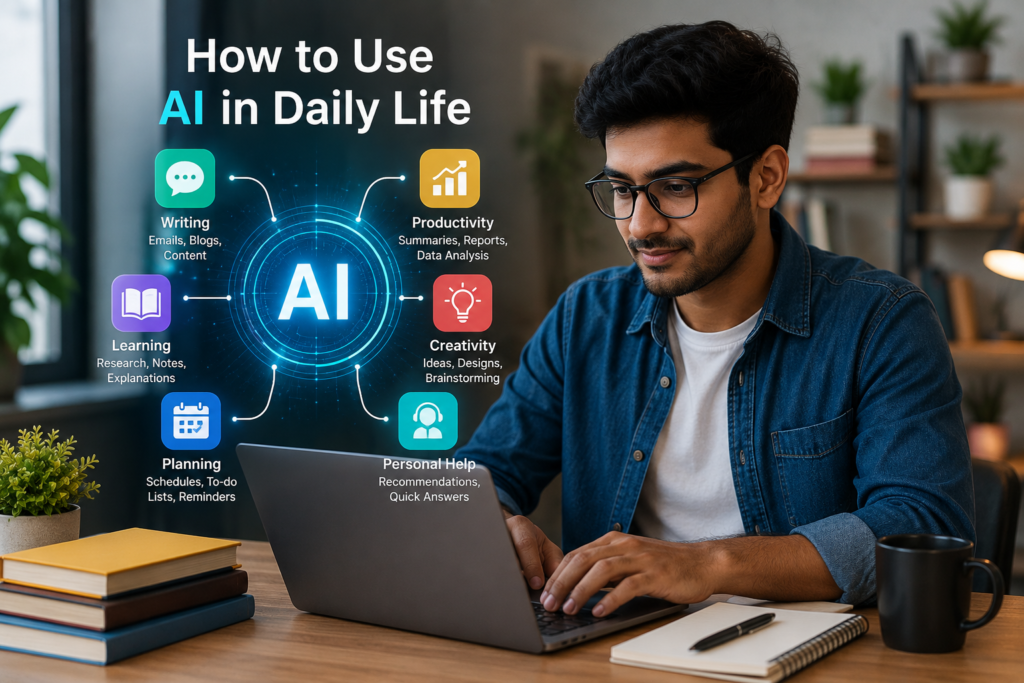
The best way to learn AI is by using it in your daily life. Try using AI for tasks like writing emails, creating notes, planning your day, or generating ideas. When you connect AI with real problems, learning becomes easier and more practical. Regular practice also helps you understand what AI can and cannot do, which is important for using it effectively.
Learn Basic Problem-Solving with AI
AI is most powerful when used for problem-solving. Instead of just asking AI for answers, try to use it to break down problems, explore ideas, and find solutions. For example, you can ask AI to suggest strategies, compare options, or explain complex topics. This approach improves your thinking skills and makes AI a true assistant rather than just a tool for quick answers.
Understand AI Limitations
AI is powerful, but it is not perfect. It can sometimes give incorrect or incomplete information. That’s why it’s important to verify important facts and use your own judgment. Understanding AI’s limitations helps you avoid mistakes and use it responsibly. Think of AI as a helper, not a replacement for human intelligence and decision-making.
Keep Learning and Improving
AI is constantly evolving, so continuous learning is important. Try to explore new tools, features, and use cases regularly. You can watch tutorials, read blogs, or take online courses to improve your skills. The more you learn, the more confident you become in using AI. Over time, you will discover smarter and faster ways to complete tasks using AI.
Benefits of Learning and Using AI
Learning AI is not just about technology—it’s about improving your daily life. It helps you work faster, think more creatively, and solve problems efficiently. AI can save time, reduce effort, and open new opportunities in education, jobs, and business. When used correctly, it becomes a powerful tool that supports your growth and productivity.
Common Mistakes to Avoid
Many beginners make the mistake of using AI without understanding it. Avoid copying results without editing, asking unclear questions, or depending completely on AI. These habits can limit your growth. Instead, focus on learning, practicing, and improving your skills. Using AI wisely will help you get better results and avoid common errors.
Quick Answers (AEO Section)
How should beginners learn AI?
Beginners should start by understanding basic concepts, then practice using simple tools like ChatGPT or Canva AI. Learning step-by-step and applying it in daily tasks is the best approach.
Do I need coding to use AI?
No, you don’t need coding skills to start using AI. Many tools are designed for beginners and can be used with simple instructions and basic digital knowledge.
How can I use AI in real life?
You can use AI for writing, studying, planning, problem-solving, and business tasks. It helps make everyday activities faster and more efficient.
Final Thoughts
Learning AI is a journey, not a one-time task. If you focus on understanding the basics, practicing regularly, and applying it in real life, you can unlock its full potential.
AI is not here to replace you—it is here to make you smarter, faster, and more productive. The sooner you start learning and using it, the better prepared you will be for the future.


 By
By
 plqxorfxkn says:

 By
By