
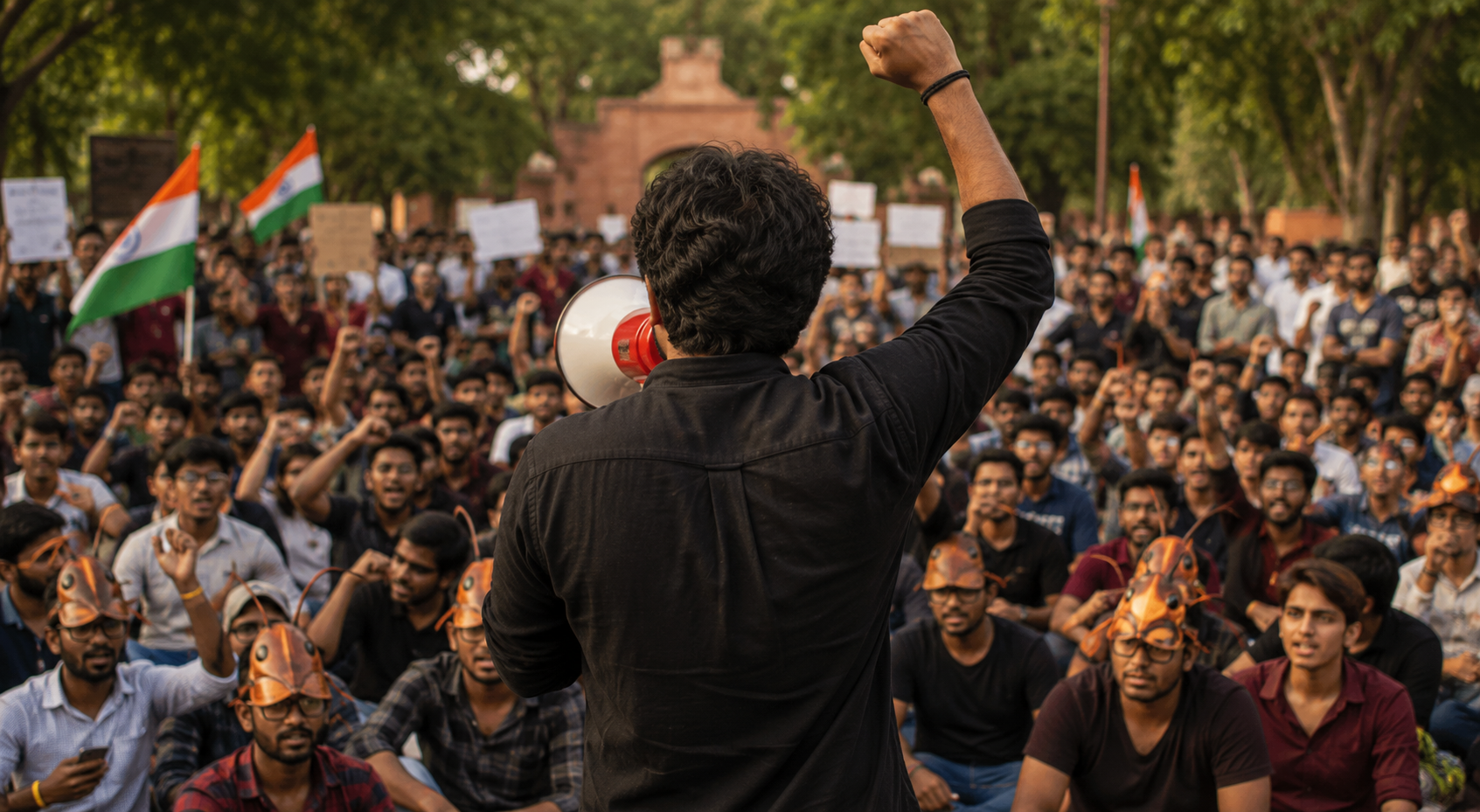

In a surprising yet powerful turn of events, the Cockroach Janta Party (CJP)—a movement that began as online satire—has taken to the streets of New Delhi. Led by founder Abhijeet Dipke, students and young citizens gathered at Jantar Mantar to protest pressing issues like exam irregularities, unemployment, and lack of accountability in the education system.
From Meme to Movement
What started as a humorous social media initiative quickly transformed into a serious youth-driven campaign. The “Cockroach” label, initially used in a controversial context for unemployed youth, was reappropriated by the movement to symbolize resilience and survival.
Within weeks, the movement gained massive traction online, attracting millions of followers and becoming a platform for frustrated young Indians demanding change.
The Jantar Mantar Protest
On June 6, 2026, the movement reached a significant milestone as hundreds of students gathered at Jantar Mantar, a historic site for protests in India. The demonstration was peaceful but impactful, with participants holding placards, wearing symbolic cockroach masks, and raising slogans.
The protest primarily demanded the resignation of Union Education Minister Dharmendra Pradhan, citing repeated exam paper leaks and irregularities in major examinations such as NEET and CBSE.
Abhijeet Dipke’s Leadership
Founder Abhijeet Dipke returned from the United States specifically to lead the protest. He emphasized non-violence and constitutional methods, urging participants to remain disciplined and focused on their demands.
Dipke also expressed his willingness to “sacrifice his freedom” for the cause, highlighting the seriousness of the movement and its commitment to long-term reform.
Key Issues Raised
The protest focused on several critical concerns:
- Exam Paper Leaks: Allegations of widespread irregularities affecting millions of students
- Youth Unemployment: Growing frustration over lack of job opportunities
- Education System Reform: Demand for transparency and accountability
- Government Accountability: Call for leadership responsibility in policy failures
These issues have resonated deeply with India’s youth population, many of whom feel their future is uncertain.
A Peaceful Yet Powerful Message
Organizers ensured that the protest remained peaceful. Participants were even given guidelines—such as carrying the national flag, staying hydrated, and avoiding provocation—showing a disciplined approach to civic activism.
Growing Impact and Government Response
Authorities reportedly monitored the protest closely, with increased security arrangements in place. While the government has downplayed the political significance of the movement, its rapid growth presents a challenge to traditional political narratives.
The movement’s shift from digital activism to physical protest signals a new era of youth engagement in India’s democratic processes.
Conclusion
The Cockroach Janta Party protest at Jantar Mantar marks more than just a demonstration—it represents a generational voice demanding change. What began as satire has evolved into a symbol of resistance, highlighting the power of youth unity in shaping the nation’s future.


 By
By

 By
By