
Indian politics is witnessing a major shift in 2026, with internal rebellions and defections shaking key opposition parties like the Trinamool Congress (TMC) and Shiv Sena (UBT). These developments are not just state-level disturbances—they are influencing the balance of power in Parliament and strengthening the BJP-led National Democratic Alliance (NDA).
This blog explains the ongoing crisis, key political developments, and what it means for India’s political future.
What Is the Current Political Crisis?
The crisis revolves around large-scale defections from opposition parties, particularly:
- Trinamool Congress (TMC)
- Shiv Sena (Uddhav Balasaheb Thackeray faction)
These defections are helping the NDA consolidate power while weakening the INDIA bloc (opposition alliance).
Shiv Sena (UBT) Crisis: “Operation Tiger”
One of the biggest developments comes from Maharashtra politics.
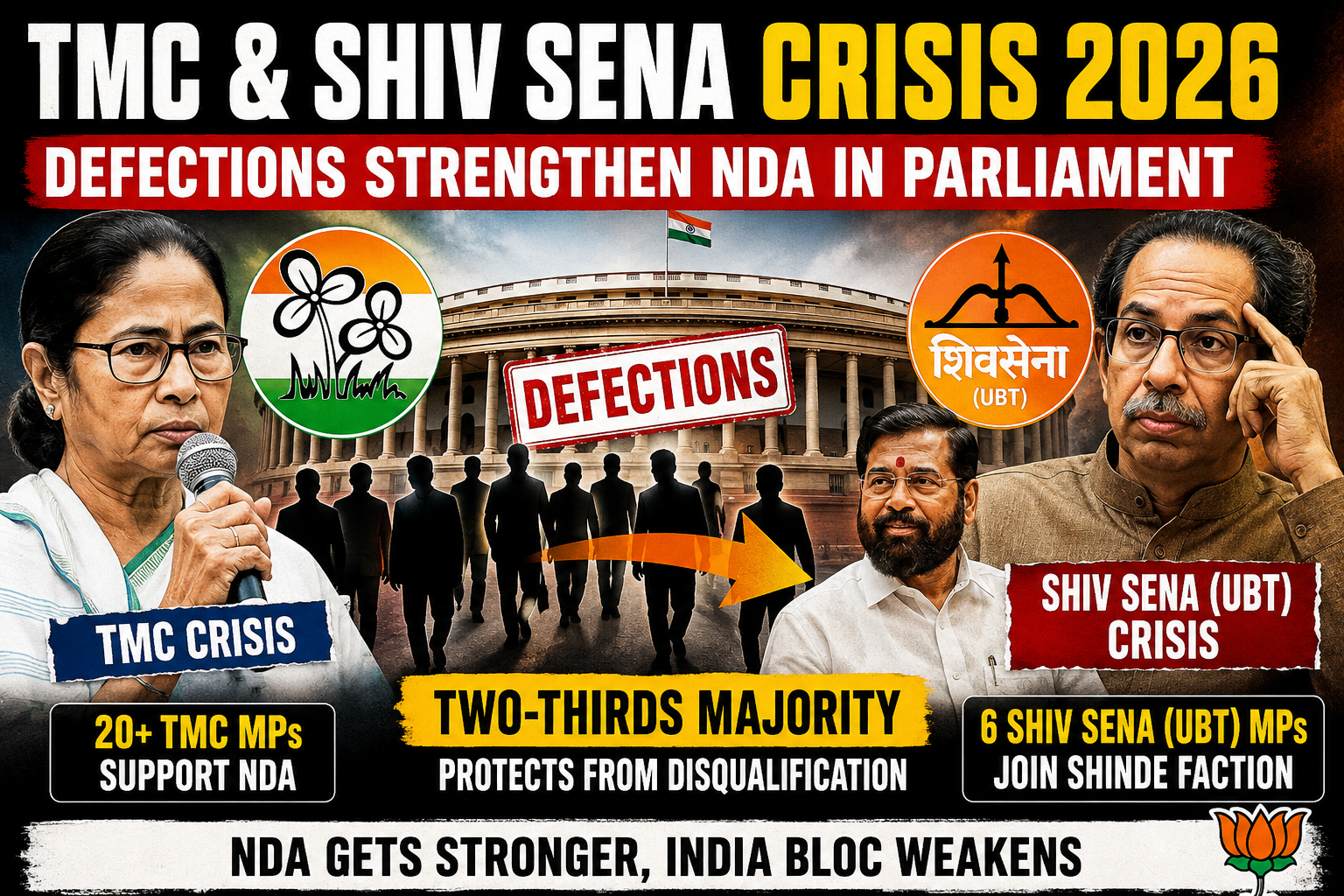
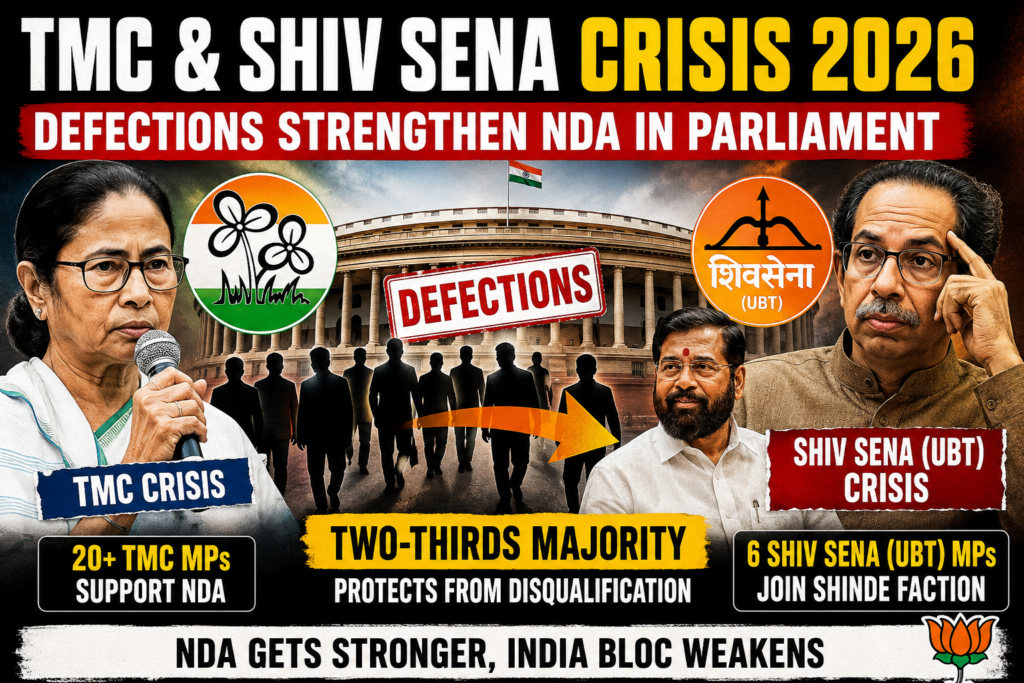
- Six Members of Parliament (MPs) from the Shiv Sena (UBT) faction defected to the Eknath Shinde-led Shiv Sena.
- This move significantly reduced Uddhav Thackeray’s strength in Parliament.
- The operation, informally called “Operation Tiger,” is seen as a strategic move to weaken the opposition.
Why This Matters
- The defecting MPs reportedly form a two-thirds majority, which can protect them from disqualification under the anti-defection law.
- It indicates deeper internal dissatisfaction within the party.
Political Impact
- The Shinde faction gains legitimacy and strength.
- The UBT faction faces a serious leadership crisis.
- More defections are expected, with leaders hinting at “further explosions.”
TMC Crisis: A Bigger Parliamentary Shock
The Trinamool Congress is also facing internal rebellion:
- Around 20 MPs reportedly broke away or expressed support for the NDA.
- This number crosses the two-thirds threshold, making the split legally valid under anti-defection laws.
Why This Is Crucial
- The NDA’s strength in Parliament increases significantly.
- Opposition unity under the INDIA bloc weakens further.
NDA Gains vs INDIA Bloc Losses
These political shifts are reshaping Parliament:
NDA Advantages
- Increased MP count due to defections.
- Reduced dependence on allies like TDP and JDU.
- Stronger position for passing key legislation.
INDIA Bloc Challenges
- Internal divisions and leadership struggles.
- Reduced bargaining power in Parliament.
- Loss of credibility among voters.
Anti-Defection Law: The Key Factor
India’s anti-defection law allows a split if:
- At least two-thirds of a party’s MPs support it.
This rule is being strategically used:
- Leaders are organizing defections in large groups.
- This avoids disqualification and ensures legal protection.
What Happens Next?
Possible Scenarios
- More Defections Likely
Political leaders have hinted that more MPs and MLAs could switch sides soon. - Opposition Restructuring
Parties like Shiv Sena (UBT) and TMC may undergo leadership changes and internal reforms. - Stronger NDA Dominance
With growing numbers, NDA could dominate Parliament more decisively.
Conclusion
The 2026 political crisis involving TMC and Shiv Sena is more than just party infighting—it is a turning point in Indian politics. As defections increase and alliances shift, the balance of power is clearly tilting in favor of the NDA.
For the opposition, this is a critical moment to rebuild unity and regain political ground. For the ruling alliance, it represents an opportunity to consolidate power and shape India’s future political direction.


 By
By

 By
By